LinksDATE
In total there are 12459 links in this list. Showing results 11451-11475.
Why children become bullies at school - BBC Future
Bullying behaviour often emerges in childhood, and the consequences for victims can last a lifetime. What makes a child become a bully?
LINK

The dark side of believing in true love - BBC Future
Old-fashioned romantics might have the wrong idea about love. Strong beliefs in true love could be blinding you to both the good and bad in your partner, with sometimes toxic results.
LINK

Why we need to talk about cheating - BBC Future
We might be predisposed to think the best in our partners, but perhaps we shouldn’t be so trusting
LINK

Climate change: Big lifestyle changes are the only answer - BBC News
The experts tell us that small, easy changes alone will not be enough to combat climate change.
LINK

Has humanity reached ‘peak intelligence’? - BBC Future
Are our IQs set to increase forever, or are we on the cusp of decline? David Robson explores the past, present and future of intelligence.
LINK

A new way to look at emotions – and how to master yours - BBC Future
A new theory of emotions reveals just how easily our feelings can be shaped by context – offering some powerful ways for dealing with stress.
LINK

Why athletes need a ‘quiet eye’ - BBC Future
Want to know who will win a World Cup game or Wimbledon match? Look closely at the athletes’ eyes — including when it seems they're about to lose.
LINK

The strange science inside your sourdough - BBC Future
We know sourdough’s flavour and texture comes from the activity of microscopic bacteria – but where exactly are they coming from?
LINK

The perils of short-termism: Civilisation’s greatest threat - BBC Future
Our inability to look beyond the latest news cycle could be one of the most dangerous traits of our generation, says Richard Fisher.
LINK

How and why did religion evolve? - BBC Future
Humanity’s most puzzling behaviour has deep roots in our evolutionary past
LINK

The surprising downsides of being drop dead gorgeous - BBC Future
Good looks can get you far in life, but there are unrecognised pitfalls for the beautiful. David Robson reports.
LINK

Why we believe fake news - BBC Future
The pace of life in the 21st Century has created “infostorms” that overwhelm our senses. Is believing in some of the sensationalist things we see actually a rational response?
LINK

The benefits of not being perfect - BBC Future
Many think that perfectionism is a good trait, but researchers have found it can have a dangerous effect on mental health – and it’s on the rise.
LINK

Stalker 'found Japanese singer through reflection in her eyes' - BBC News
A Japanese man accused of assaulting a singer says he located her through the reflection in her eyes.
LINK

A frozen graveyard: The sad tales of Antarctica’s deaths - BBC Future
Beneath layers of snow and ice on the world’s coldest continent, there may be hundreds of people buried forever. Martha Henriques investigates their stories.
LINK

Israel cave bones: Early humans 'conserved food to eat later' - BBC News
Early humans living 200,000-420,000 years ago were previously not thought capable of such planning.
LINK
How you can make better predictions - BBC Future
A few individuals have a heightened ability to forecast what will happen to companies, the economy and politics. What traits do they share?
LINK
The surprising benefits of being blinded by love - BBC Future
Our romantic partners may be riddled with flaws but do our own biases mean we overlook these, even if there are better options on offer elsewhere?
LINK

The man who can remember every day of his life - BBC Future
Some think it’s a blessing, others think it’s a curse. Bob Petrella can remember every moment of his life, in visceral detail.
LINK
If we made contact with aliens, how would religions react? - BBC Future
The discovery of life on another planet might seem incompatible with faith in a deity. Yet many theologians are already open to the existence of extraterrestrials
LINK
Clues to your personality appeared before you could talk - BBC Future
Long before you could express yourself with words, you were giving away the signs of your adult temperament. Christian Jarrett explains how.
LINK
Maps have ‘north’ at the top, but it could’ve been different - BBC Future
Why are almost all modern maps the same way up? Caroline Williams explores the intriguing history – and how it sways our psychology.
LINK
Japan ninja student gets top marks for writing essay in invisible ink - BBC
Eimi Haga handed in what looked like a blank sheet of paper - but left her professor a crucial clue.
LINK

Why there is no such thing as a ‘normal’ brain - BBC Future
Having been diagnosed with ADHD at 38, Howard Timberlake went on a personal quest to discover whether any of us has a “typical” mind.
LINK
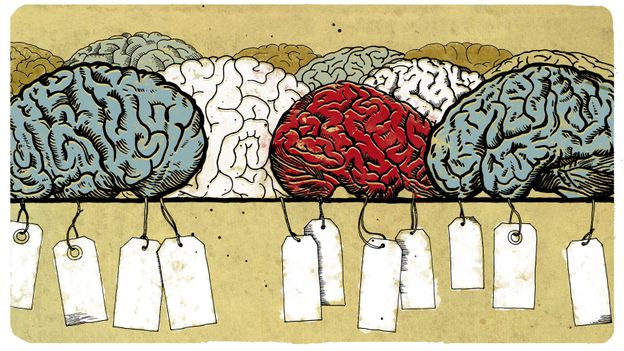
Tomorrow’s Gods: What is the future of religion? - BBC Future
Throughout history, people’s faith and their attachments to religious institutions have transformed, argues Sumit Paul-Choudhury. So what’s next?
LINK